


Explore the Competitive World of Indian Poker Tournaments

CARD GAMES have changed from being social to being competitive. After many years of socialising over
bingo, along came a whole new generation of card games that are played at a
competitive level. Students and young people see poker tournaments as an opportunity to compete on
skill level with others, in an environment that requires a great deal of commitment and
discipline.
Poker has gone through many changes over the last ten years due to new laws and
regulations regarding poker and, more recently, tournament formats; if you’re interested in playing in
these tournaments, it is important to remain current in these evolving areas of regulation and
tournament formats.
In this blog, you will learn everything about Indian poker tournament
competitions: what they are and how they work today; the impact of recent changes in rules and
regulations; and how you, as a student or aspiring player, can comprehend and safely participate in
these tournaments.
What is Poker Tournaments in India
Poker tournaments are organized competitions where many players face off against one another over several rounds until a winner or winners is decided, with cash or trophy prizes awarded at the end of the event. While the game has long been associated with being a social activity in India, it is now being recognized as a serious competitive game that requires skill to play at a high level.
Historically, both poker and all other card games had a mixed view among people in India; when poker was first introduced it was primarily viewed as a gambling game by most individuals. However, as more people have become aware of poker’s strategic nature, through the growth of internet access and access to online games, poker has become increasingly popular among young adults and college students in India. For example, by 2025, with the growth of the Indian online poker market, there are expected to be around 11.2 million active poker players and 1.7 million daily active players in India.
While most students and motivated individuals may view tournaments as a way to gain experience and show off their skills in areas such as judgment, risk management, concentration, and strategy under duress; it is also important to be aware of the changing legal landscape of real money gaming in India.
Key Concepts & Terminology
Understanding poker — especially tournament poker — requires familiarity with certain core terms and structures. Here are some essential concepts:
- Tournament (MTT – Multi-Table Tournament): A structured poker event where many players begin, and through rounds of betting and elimination, a final winner (or winners) emerges.
- Cash Games vs. Tournaments: In cash games, chips correspond to real money directly; players can join or leave any time. In tournaments, players start with fixed chips, and once eliminated, they are out — but potential earnings (prize pool) can be much larger.
- Freerolls & Low-Buy-In Tournaments: Freerolls are tournaments with no entry fee but prize money. Low-buy-in tournaments have minimal entry cost — useful for beginners or students.
- Rake / Rakeback / Bonuses: “Rake” is a fee taken by the poker site for hosting games. “Rakeback” refers to returning a portion of this fee to players — often used as a perk to reward active players. Bonuses may include deposit bonuses, welcome offers, or special tournament promotions.
Variants: Common poker variants in India include:
- Texas Hold’em — the most popular, beginner-friendly format.
- Omaha — offers four starting cards, changing the strategy and hand dynamics.
- Other less common formats (on some sites) like Short-Deck, Seven-Card Stud, etc.
These terms and structures form the foundation for how tournaments are organized and played. For a student or first-time tournament aspirant, understanding these helps in making the right strategic and financial decisions.
Latest Trends and Updates (2024–2025)
The world of poker tournaments in India is currently undergoing major shifts — both in popularity and regulation. Here are the key developments:
• Surge in Popularity and User Base
- As mentioned, by 2025 active poker users reached around 11.2 million in India, with 19% growth year-on-year.
- More students and young adults are drawn to poker due to its challenging gameplay, social appeal, and possibility (though uncertain) of earnings.
• Legal & Regulatory Shake-up
- In August 2025, Indian Parliament passed the Promotion and Regulation of Online Gaming Act, 2025, which prohibits real-money online games, including poker and rummy.
- This bill has resulted in many domestic poker platforms ceasing real-money offerings.
- At the same time, there are ongoing discussions and legal ambiguity: some analysts argue that purely skill-based games like poker should be exempted from such bans.
• Rise of Alternative Formats and Live/Offline Poker Tournaments
-
With online real-money poker facing restrictions, many are redirecting toward offline or live tournament formats. The rise of leagues and organized poker events — with transparency and regulated format — is becoming more prominent. For example, the Poker Sports League (PSL) in India is one such initiative that tries to keep poker competitive while avoiding legal issues tied to real-money wagering.
-
Additionally, newer platforms and formats are exploring skill-based competitions without money stakes, making poker more accessible to students or recreational players.
• Growing Awareness of Poker as a Skill-Based Game
- The acceptance of poker as a skill-based game (rather than pure gambling) is gradually gaining ground among youth. This shift is helping create a more mature, strategy-oriented player base rather than casual bettors.
Learn Poker for Skill & Strategy (Not Just Money)
Even if real-money games are restricted, you can treat poker as a game of skill — useful for sharpening mental faculties like decision-making, risk-assessment, patience, and focus. These skills are transferable: helpful in academics, personal finance, business ventures, or competitive careers.
- Example: Preparing for a big poker tournament (or even a friendly game) requires probability calculations, reading opponents, bluffing strategy — all of which train analytical thinking and emotional control.
Participate in Non-Money or Casual Tournaments / Leagues
With the legal limits on online real-money poker, many players now participate in:
-
Live / offline tournaments (home games, clubs, student groups)
-
Skill-based leagues (like PSL-style events)
-
Practice games without money (“play money” games) — useful to build experience without risk
Such participation helps you gain real experience, improve strategies, and enjoy poker socially without legal or financial complications.
Responsible & Balanced Approach (Time Management & Self-Control)
Especially as a student: treat poker like a hobby or sport, not as a shortcut to easy money. Maintain balance: studies, hobbies, health, social life. Avoid addictive behavior; treat poker for enjoyment and skill growth rather than income.
Use Poker as a Learning Tool for Real-World Skills
Poker’s decision-making, risk-vs-reward evaluation, probability assessment, and reading human behavior are all useful beyond the card table — in business proposals, project planning, entrepreneurship, or even investment decisions.
Case Study (Hypothetical):
Raj — a second-year engineering student in Delhi —
joined a college poker club (with no real-money games). Over 2 semesters, his regular participation
taught him discipline, patience, and strategic thinking. Later that mindset helped him in group
assignments where risk-reward thinking and planning under uncertainty gave him an edge.
Resources for Further Learning
If you want to explore poker deeper, learn strategies, or follow updates, here are some useful resources:
| Resource Type | Name / Description |
|---|---|
| Web Guides & Articles | “Online Poker in India – Ultimate Player Guide” on Pokerfuse. |
| Platform Reviews & Site Lists | “Best Online Poker Sites in India, 2025” on PokerScout / CardPlayer / ReadWrite. |
| Skill-Building & Tutorials | Beginner guides and poker strategy articles (TEXAS Hold’em, Omaha, tournament strategies) from major poker-blog sites. |
| Offline / Social Communities | Local college poker clubs or community groups to simulate poker tournaments without financial risk. |
| Legality & Regulation Awareness | Articles analyzing the 2025 Online Gaming Act & its implications — helps you stay informed and responsible. |
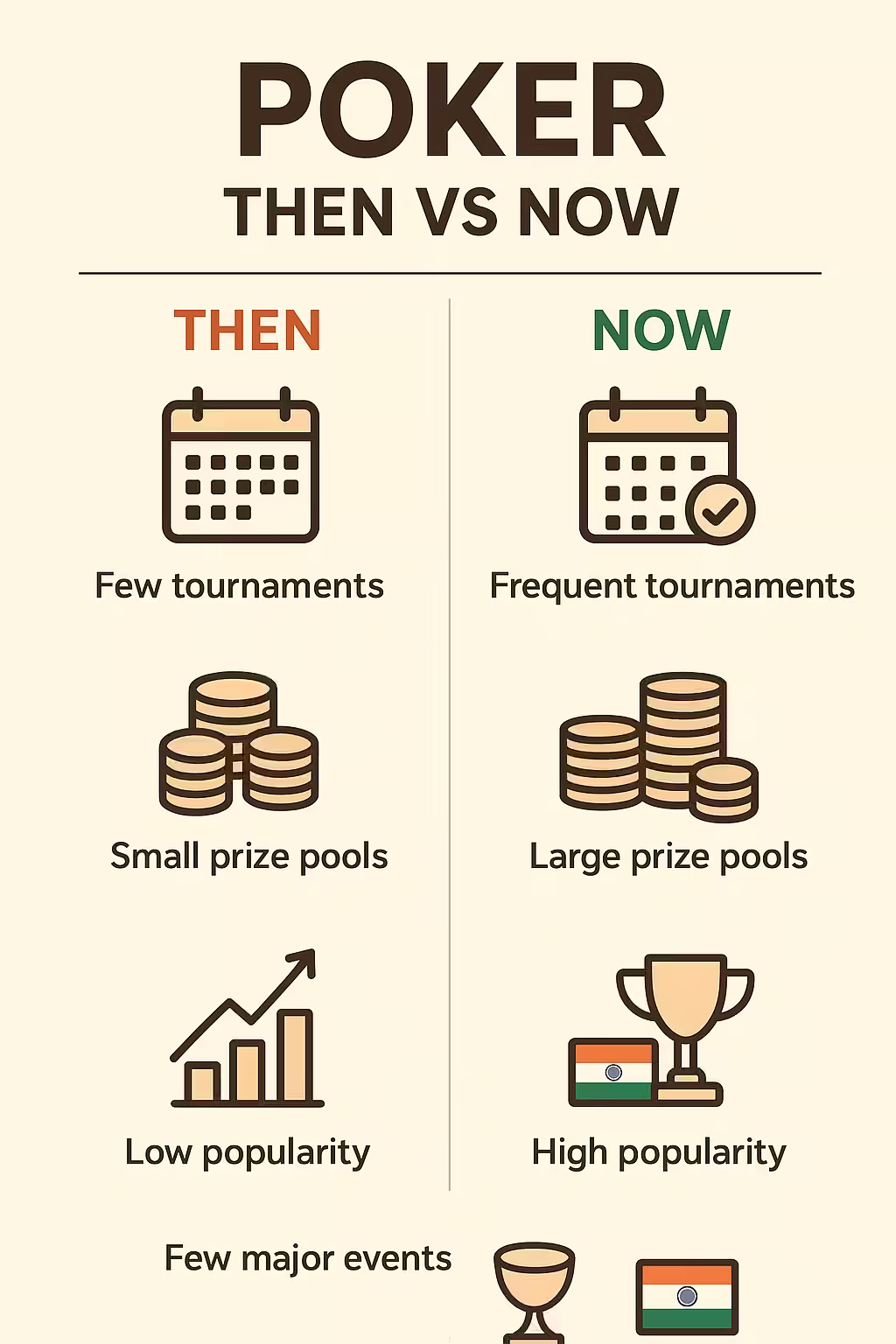
Comparison Table: Poker Then vs Poker in 2025 India
| Feature / Aspect | Earlier (Pre-2023) | 2025 Situation |
|---|---|---|
| User base | Growing slowly, mostly offline games | ~ 11.2 million active poker users, 1.7 million DAU |
| Online real-money poker legality | Operated in legal grey-areas, state-wise regulation | New law (2025) bans online real-money games nationwide |
| Participation format | Mix of cash games and tournaments | Shift toward non-money tournaments, live/club poker, skill-based leagues like Poker Sports League |
| Player perception | Often seen as gambling | Increasing acceptance as skill-based competitive gameplay |
| Opportunities for students | Limited & uncertain | Better clarity on risks; more focus on skill, social events, and restructured formats |