


BLUFF: The Complete Guide to Mastering Bluffing in Card Games
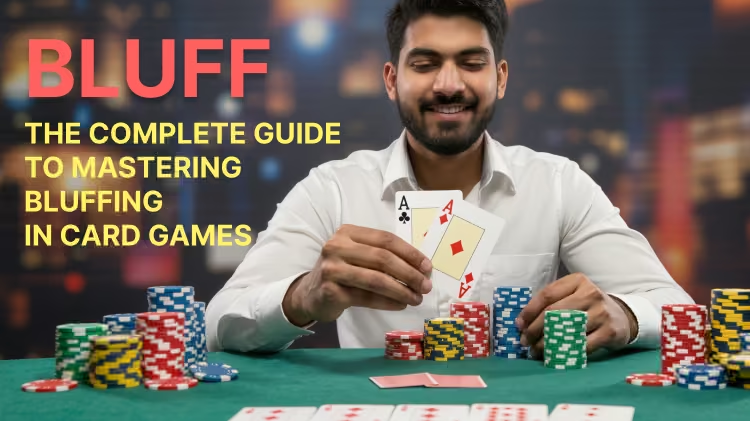
Are you looking for a fun, fast-paced card game to play with family or friends during Diwali gatherings or lazy weekends? If yes, then Bluff card game is your perfect pick! Known as “Bluff” in India, this exciting game of lies and guesses has been a favorite for generations. It’s simple to learn, quick to play, and full of laughter and surprises. In this detailed guide, we’ll dive deep into everything you need to know about the Bluff card game rules in India, how to play it step-by-step, winning strategies, and why it’s so popular among Indians.
Whether you’re a complete beginner in Bangalore or a pro in Mumbai, this Bluff game guide will help you bluff your way to victory. Let’s get started – no fancy decks needed, just a standard 52-card pack and some bold moves!
What is the Bluff Card Game? A Quick Introduction
The Bluff card game, also called “Cheat,” “I Doubt It,” or “Bullshit” in other parts of the world, is a shedding game where the goal is to get rid of all your cards first. But here’s the twist: you can lie about what cards you’re playing! Players take turns placing cards face-down on a pile, claiming they’re of a specific rank (like all Aces or all 7s). If someone calls “Bluff!“ and you’re caught lying, you pick up the pile as punishment.
In India, Bluff is more than a game – it’s a social icebreaker. Picture this: a group of cousins in Delhi during Holi, cards flying, accusations ringing out, and endless giggles. It’s perfect for 3 to 10 players and takes just 10-20 minutes per round. No wonder it’s a staple at Indian house parties, school trips, and even office breaks.
Why does Bluff thrive in India? Our love for drama, quick wit, and family bonding makes it ideal. Plus, it’s budget-friendly – use any standard deck without Jokers. If you’re new to card games like Rummy or Teen Patti, Bluff adds a layer of deception that’s both thrilling and harmless.
Click Here: Teen Patti Game Download
Check It Here: Teen Patti Master New Version
The History of Bluff: From Global Roots to Indian Hearts
Card games have a rich history, and Bluff is no exception. Its origins trace back to the 19th century in Europe and America, where it was known as “I Doubt It.” Early versions appeared in British colonies, including India during the Raj era. British officers played it in clubs, and it quickly spread to local communities.
By the mid-20th century, Bluff became a hit in Indian homes. In the 1970s and 80s, with Bollywood’s rise, games like this mirrored the “masala” films – full of twists and bluffs! Today, apps like “Bluff Card Game” on Google Play have millions of downloads in India, proving its digital evolution.
Fun fact: In some Indian regions, it’s called “Jhootha” (meaning liar), reflecting our playful take on fibbing. Unlike serious games like Poker, Bluff teaches light-hearted risk-taking, much like haggling in Mumbai markets.
This game isn’t just entertainment; it builds skills like observation and psychology. Studies from the University of Chicago (adapted for fun) show such games improve social cues reading – perfect for India’s diverse, chatty culture.
Essential Bluff Card Game Rules: Everything You Need to Know
Before jumping in, let’s break down the Bluff card game rules simply. No complicated scoring – just pure fun!
What You’ll Need
- Players: 3-10 (best with 4-6 for lively action).
- Deck: One standard 52-card deck (no Jokers). For larger groups, use two decks.
- Space: A table or floor mat to place the discard pile.
Basic Setup
- Shuffle the deck well.
- Deal all cards face-down, one at a time, until the deck is empty. Some players might get one extra card – that’s fine!
- The player to the left of the dealer starts. Play moves clockwise.
How Ranks Work in Bluff
Cards are ranked from Ace (lowest, like 1) to King (highest). The sequence for play is: Ace, 2, 3, 4, 5, 6, 7, 8, 9, 10, Jack, Queen, King. Suits (hearts, diamonds, etc.) don’t matter.
Core Rules of Play
- Starting the Game: The first player must play exactly 1 to 4 cards (depending on what feels right – more on strategy later) face-down on the table. They announce the rank, e.g., “Three 5s!“ Even if it’s a lie!
- Next Turns: The next player must play a higher rank than the previous one. For example, if 5s were played, you say “Two 6s” or more. Always play 1-4 cards face-down.
- Wrapping Around: After Kings, it wraps to Aces (Aces beat Kings).
- Calling Bluff: At any time after a play, any player can shout “Bluff!“ or
“Cheat!“ The cards are flipped up.
- If Caught Bluffing: The player who lied picks up the entire discard pile and adds it to their hand.
- If Not Bluffing: The caller picks up the pile instead.
- Ending a Round: The first player to empty their hand wins the round. Others can continue for last place fun, or restart.
Special Rules for Indian Twists
In many Indian homes, especially in South India, players add “Pass” – you can skip your turn once per round without penalty. In North India, some play with “Wild Cards” where Jacks can be any rank. Always agree on house rules before starting!
Penalties keep it fair: No peeking at the pile until called. If someone peeks, they draw 5 cards.
Step-by-Step Guide: How to Play Bluff Card Game
Ready to deal? Here’s a beginner-friendly how to play Bluff walkthrough with an example for 4 players: Amit, Priya, Raj, and Sneha. Amit starts.
Step 1: Deal and Begin
- Deal: Everyone gets about 13 cards.
- Amit’s Turn: He has two 2s and a 7. He plays three cards face-down and says, “Three 2s!“ (Bluffing – only two are real).
Step 2: Build the Pile
- Priya’s Turn: Must play higher than 2s. She has a 3 and two 4s. Plays two cards: “Two 3s!“ (One bluff).
- Raj’s Turn: Plays four cards: “Four 5s!“ (Total lie – he has none).
- Sneha’s Turn: Suspects Raj. She calls, “Bluff!“
Step 3: Resolve the Call
- Flip the pile: Amit’s two 2s and one 7 (bluff caught, but wait – calls are per turn? No, full pile check).
- Actually, in standard rules, only the last play is checked, but Indian variant often checks all recent plays. Raj’s four 5s are fake – Raj picks up the pile (now 9 cards added to his hand).
Step 4: Continue Until Victory
- Play resumes from Sneha. She plays “One 6.”
- Keep going until someone shouts “Bluff” wisely or empties their hand.
- Amit, with fewer cards now, plays smartly and wins by dumping his last three as “Three Queens” (true!).
Pro Tip: Keep the energy high with dramatic calls – “Jhootha!“ adds flavor.
For visual learners, search YouTube for “Bluff card game tutorial India” – tons of Hindi-English videos from creators like Art of Cards.
How to Win at Bluff
Bluff isn’t just luck; it’s mind games! Here are proven Bluff game strategies tailored for Indian players who love outsmarting like in Antakshari.
1. Master the Bluff Timing
- When to Lie: Bluff early when the pile is small – easier to hide. Save truths for high-stakes moments.
- Count Cards: Track announced ranks. If someone claims “Four Aces” but only four exist, call them!
- Indian Hack: In big groups, watch body language. Fidgety hands? Big bluff!
2. The Art of Calling Bluffs
- Don’t call every time – you’ll look paranoid and pick up piles yourself.
- Call on patterns: If a player always plays four cards, they’re likely lying.
- Stats Tip: In a full deck, odds of four-of-a-kind are low (only 13 ranks), so challenge big claims.
3. Hand Management Tricks
- Dump Low Cards: Get rid of Aces and 2s first – they’re hard to play later.
- Build Alliances: In family games, subtly signal to siblings (a wink means “call this guy!“).
- Advanced Move: Play “safe bluffs” – mix one real card with fakes, e.g., one real 7 and two 8s as “Three 7s.”
4. Psychological Plays
- The Stare-Down: Lock eyes while announcing – unnerves opponents.
- Fake Confidence: Say “Two Kings!“ with a grin, even if it’s junk.
- For Kids: Teach gentle bluffs to build confidence without hurt feelings.
Practice these in low-stakes games. Over time, you’ll read opponents like a book – just like negotiating auto-rickshaw fares in Chennai!
Variations of Bluff: Spice It Up for Indian Celebrations
Standard Bluff is great, but variations keep it fresh for festivals like Eid or Christmas.
1. Speed Bluff
- Time limit: 30 seconds per turn. Miss it? Draw two cards. Perfect for impatient Kolkata crowds.
2. Bluff with Twists (Indian Style)
- Bombay Bluff: Use two decks; add “Bomb” cards (Jokers) that force the next player to skip.
- Kerala Challenge: Winner of a round gets to “steal” one card from the loser. Adds revenge fun!
3. Team Bluff
- For even numbers: Pairs play together. Whisper strategies – like plotting a surprise party.
4. Digital Bluff
- Try apps like “Bluff: Fun Family Card Game” on Play Store. Multiplayer online with Indian servers for lag-free Diwali matches.
These tweaks make Bluff endless. Poll your group: “What variation next?” to keep everyone hooked.
Tips for Beginners: Common Mistakes to Avoid in Bluff
New to Bluff card game India? Here’s your cheat sheet (ironically!):
- Mistake 1: Bluffing Too Much: Start honest to build trust, then strike.
- Mistake 2: Ignoring the Pile: Always glance – it grows, and so does risk.
- Tip: Play with familiar faces first. Strangers amp up paranoia!
- For Parents: Set ground rules – no hard feelings on calls. It’s about joy, not winning.
- Storage Hack: Keep decks in a masala dabba for easy grabs.
Cultural Connections and Benefits
In a country of 1.4 billion, Bluff stands out for its inclusivity. From Kerala backwaters to Rajasthan deserts, it’s played everywhere – no language barrier, just universal laughs.
Cultural Fit:
- Mirrors Bollywood plots: Heroes bluff villains, just like Shah Rukh Khan in Baazigar.
- Builds bonds: In joint families, it’s a nightly ritual, teaching patience and humor.
- Educational Perks: Sharpens math (counting odds), language (quick calls), and empathy (reading faces).
Post-pandemic, Bluff surged as a safe, indoor activity. Google Trends shows peaks during lockdowns in India. It’s therapy in card form – de-stress after a long workday in Hyderabad.
Compared to other Indian games:
| Game | Players | Skill Focus | Fun Factor |
|---|---|---|---|
| Bluff | 3-10 | Deception | High (laughs galore) |
| Teen Patti | 3-6 | Betting | Medium (money stress) |
| Rummy | 2-6 | Sequences | Low (strategic, less chat) |